
At a Glance
The difference between hot rolled and cold rolled steel comes down to how the steel is processed, which directly affects tolerances, surface finish and cost. Hot rolled steel is formed at very high temperatures and is typically specified for structural and heavy-duty applications, while cold rolled steel is processed at room temperature to deliver tighter tolerances, smoother surfaces and higher consistency for precision uses.
For engineers, fabricators and procurement teams, choosing the wrong option can lead to over-specification, fabrication challenges or unnecessary cost.
Understanding the Steel Rolling Process
Steel rolling is a forming process where material is passed through rotating rollers to achieve a desired shape, thickness and profile. The main difference between hot rolled and cold rolled steel is whether the steel is processed above or below its recrystallisation temperature.
- Hot rolling process: Steel is rolled at very high temperatures, making it easier to form and shape under heavy loads.
- Cold rolling process: Steel is rolled after cooling, increasing strength and surface quality through cold forming.
Both methods are used to produce rolled steel products for construction, infrastructure, manufacturing and transport.
How the Hot Rolled Steel Process Works
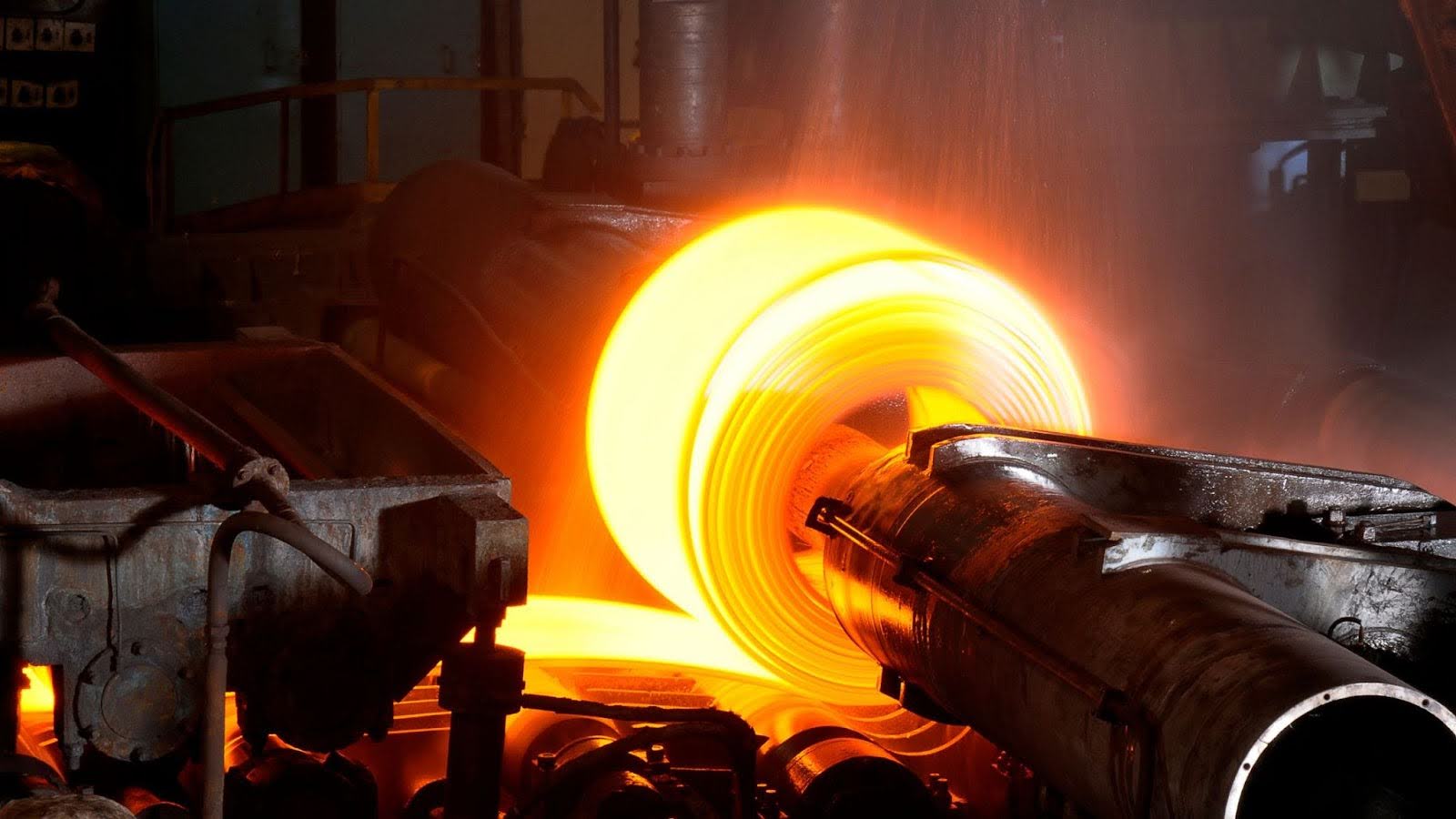
Hot rolled steel is processed while the steel is still above its recrystallisation temperature, often glowing red-hot. At these high temperatures, steel is highly ductile, allowing it to be formed efficiently into plate, sheet, coil and structural products.
After rolling, the steel is cooled gradually, typically in ambient conditions. This reduces internal stress but results in looser dimensional tolerances and a rougher surface finish.
Key Characteristics of Hot Rolled Steel
- Rough surface finish with mill scale
- Less precise dimensions
- Good ductility and toughness
- Lower cost due to fewer processing stages
- Suitable for secondary processing
Typical Applications
Hot rolled steel is commonly specified for:
- Structural applications and structural products
- Beams, columns and frames carrying heavy loads
- Infrastructure, mining and industrial equipment
- Base material for further processing such as slitting or forming
How Cold Rolling Differs
Cold rolled steel starts as hot rolled material that is pickled, cleaned and then passed through a cold rolling mill at room temperature. The steel is compressed beyond its yield point, increasing strength and hardness through cold forming.
In some cases, steel is temper rolled to refine surface finish and mechanical properties.
Key Characteristics of Cold Rolled Steel
- Smooth surface and uniform appearance
- Tighter tolerances and precise dimensions
- Higher strength and hardness products
- Guaranteed minimum yield strength and hardness
- Surfaces suitable for exposed applications
Typical Applications
Cold rolled steel products are widely used for:
- Cold rolled steel sheet and coil products
- Cold rolled steel profiles
- Appliances, enclosures and automotive panels
- Deep drawing steels and formable products
- Roll forming and precision manufacturing
Hot Rolled vs Cold Rolled Steel: Key Differences
| Property | Hot Rolled Steel | Cold Rolled Steel |
|---|---|---|
| Processing temperature | Above recrystallisation | Below recrystallisation |
| Surface finish | Rough surface with mill scale | Smooth surface |
| Dimensional accuracy | Lower | Higher |
| Mechanical properties | Softer, more ductile | Higher strength and hardness |
| Internal stress | Minimal | Higher |
| Cost | Lower | Higher |
| Best suited for | Structural and heavy-duty use | Precision and exposed applications |
When Engineers Specify Hot Rolled vs Cold Rolled Steel (Checklist)
The differences between hot rolled and cold rolled steel can directly influence fabrication efficiency, compliance and project cost.
Specify Hot Rolled Steel When:
- The application is structural or load-bearing
- Dimensional tolerances are not critical
- The steel will be welded, formed or further processed
- Cost efficiency matters at scale
- Surface finish is secondary or will be treated later
- The product will be galvanised or coated
Common uses: beams, frames, infrastructure, industrial fabrication, base material for slitting and forming.
Specify Cold Rolled Steel When:
- Precise dimensions and tight tolerances are required
- The steel will be used in exposed or visible applications
- A smooth, consistent surface finish is essential
- Higher strength or hardness is required in thinner sections
- The product involves roll forming or deep drawing
Common uses: sheet and coil products, cold rolled steel profiles, enclosures, appliances and architectural elements.
Rule of Thumb:
- If the steel’s job is strength and structure, start with hot rolled.
- If the steel’s job is precision or appearance, specify cold rolled.
Strength, Hardness & Mechanical Properties
Is Hot Rolled Steel Stronger Than Cold Rolled Steel?
In most cases, cold rolled steel is stronger. The cold rolling process increases yield strength and hardness through work hardening. Hot rolled steel, however, offers better ductility and toughness, making it ideal for structural applications where flexibility under load is required.
Cold rolled products are often supplied with:
- Guaranteed minimum yield strength
- Guaranteed minimum hardness
- Guaranteed chemical composition
Surface Finish, Corrosion & Downstream Processing
Hot rolled steel’s rough surface and mill scale can provide short-term corrosion resistance, but it is not intended for long-term exposure without treatment. Protective coatings or surface improvements are recommended for exposed environments.
Cold rolled steel provides a cleaner surface that is better suited to polishing, coating or architectural applications. Midway Metals supports this with sheet and coil polishing, improving surface quality for exposed or aesthetic uses:
Coil Processing & the Importance of Slitting
Both hot rolled and cold rolled steel are commonly supplied in coil form. Precision processing is critical to ensure material performs correctly during fabrication.
Midway Metals’ slitting line process allows steel coil to be cut into exact widths with clean edges and consistent tolerances, reducing waste and improving production efficiency across a wide range of applications:
Real-World Example: Hot Rolled Steel in Major Infrastructure
A practical Australian example of hot rolled steel in use is the Brisbane Riverwalk redevelopment project.

Following the destruction of the original Riverwalk during the 2011 floods, Brisbane City Council delivered a re-imagined structure with a 100-year design life. While stainless steel was specified for many exposed and corrosion-prone elements, hot rolled, annealed and pickled (HRAP) steel supplied by Midway Metals played a critical role in fabricated and structural components where strength, durability and formability were essential.
Midway Metals supplied thousands of metres of HRAP flat bar and hot rolled plate, processed to precise sizes to minimise waste during fabrication. The project highlights how hot rolled steel remains fundamental in large-scale infrastructure, even when paired with higher-specification materials for exposed zones.
Learn more about this project.
Choose the Right Rolled Steel with Confidence
The key difference between hot rolled and cold rolled steel is not which is better, but which is fit for purpose. With extensive industry experience, Midway Metals works closely with engineers, fabricators and buyers to:
- Select the right rolled steel product
- Balance performance with cost
- Access precision processing such as slitting and polishing
- Reduce risk across fabrication and installation
If you’re specifying steel for a structural, manufacturing or exposed application, explore our full range of stainless steel products or speak with the Midway Metals team for practical advice.
Frequently Asked Questions-
What is cold rolled steel?
Cold rolled steel is steel that has been processed at room temperature after hot rolling to improve surface finish, strength and dimensional accuracy.
Is cold rolled steel stronger than regular steel?
Yes. Cold rolled steel generally has higher strength and hardness due to cold forming.
What are three advantages of hot rolled steel?
Lower cost, better ductility, and suitability for structural and heavy-duty applications.
Does hot rolled steel rust easily?
It can corrode over time if left untreated. Protective coatings or surface improvements are recommended for exposed applications.